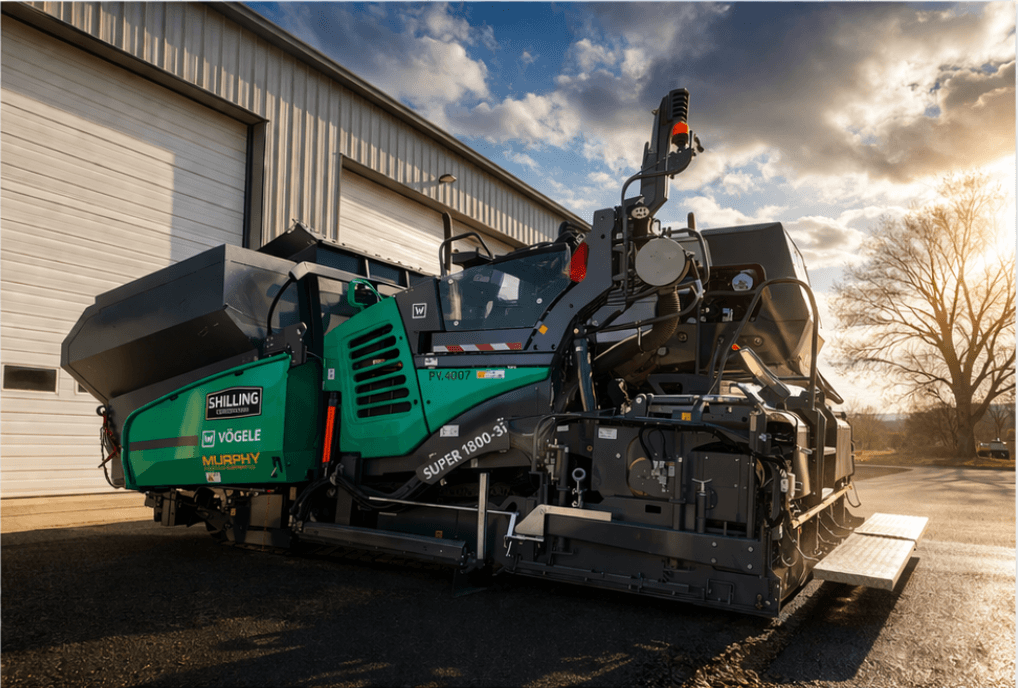
For nearly two decades, spray paving has been part of how Shilling Construction Company builds and maintains roads across Kansas. The method allows asphalt emulsion and hot mix asphalt to be applied in a single pass, helping create a strong bond between pavement layers and supporting the long term performance of thin asphalt overlays. Shilling Construction Company first adopted spray paving technology in 2007 when the company invested in its first spray paver. At the time, the process was still emerging across much of the United States, and transportation agencies were beginning to evaluate how spray paving could be used as a cost effective way to extend pavement life.
For Shilling Construction Company, the decision reflected a long standing philosophy of staying current with evolving construction methods. This approach helps ensure crews are prepared to deliver the techniques specified by project owners.
What Is Spray Paving
Spray paving combines two steps of the paving process into a single operation. A spray bar mounted on the front of the paver applies a controlled layer of asphalt emulsion directly onto the roadway immediately ahead of the screed, and the hot mix asphalt is placed on top of that emulsion in the same pass. In traditional paving operations, tack oil is often applied ahead of time and allowed to break before paving begins. With spray paving, the emulsion is applied immediately before the asphalt mat is placed, allowing the fresh hot mix to interact directly with the emulsion as it is applied and helping create a strong bond between pavement layers. This improved interlayer bond can support the durability of thin asphalt overlays.
Early Adoption in Kansas
During the early years of spray paving, gaining experience with the technology often meant working on projects where agencies were still evaluating how the process would perform. Shilling crews developed practical knowledge with the method as spray paving began appearing on projects across the region. Several agencies across Kansas incorporated spray paving into their pavement programs over time. The Kansas Department of Transportation was among the early adopters, often using thin overlays as a way to stretch pavement budgets while maintaining roadway performance. Sedgwick County also utilized spray paving on several projects, and the City of Manhattan experimented with the process on select municipal streets.
Investing in the Next Generation
While the basic concept of spray paving has remained consistent, the equipment used to perform the work has advanced significantly over the past two decades. Earlier machines relied primarily on mechanical controls for emulsion distribution. Today’s equipment incorporates digitally controlled spray systems, improved operator controls, and real time diagnostics that allow crews to manage the paving process with greater precision. In recent years, spray paving specifications have appeared more frequently on transportation projects across Kansas. To remain competitive and maintain the ability to self perform this type of work, Shilling Construction Company recently invested in a new generation spray paver.
“This investment is about staying competitive and serving our KDOT and local agency partners,” said Travis Shilling of Shilling Construction Company. “If our customers want spray paving, then it’s our responsibility to invest in the equipment and technology to deliver that product at the highest level.”
Nearly twenty years after its first investment in spray paving equipment, Shilling Construction Company continues to build on that experience with the next generation of technology and training. As agencies evaluate the best methods for maintaining and improving roadway infrastructure, spray paving remains an important tool for delivering durable asphalt pavements across Kansas.
Family Founded. Community Driven.
